Preserving cemetery history

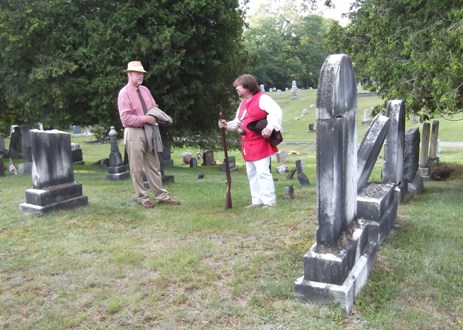
Preservation of the history contained in burial grounds is relegated to a small group of dedicated caretakers without the resources, time and often energy to take care of the sacred places with which they are entrusted. HSM member Ed Stewart passed along an article from Nebraska about a woman who has made it her life’s work to repair and restore monuments that ‘belong’ to no one else.

http://www.telegram.com/article/20130803/NEWS/130809977/1052

Her idea to establish a non profit with a mission to take care of abandoned cemeteries is worth considering for our area. Anyone interested? There are SO many local burial grounds that need attention — can someone step forward to organize restoration projects? There is a core of interested people in Friends of Middletown Cemeteries, but no one to lead the charge . . . Please contact HSM if you’d like to be that person! history@catskill.net.

Marianne Greenfield of Delhi is a local cemetery steward who cares deeply about preserving the names and life histories of the dead by taking care of their resting places. Hers is a commercial service with a historical mission:

Marianne Greenfield
Gravestone Cleaning Service
607 267-2708
www.gravestonecleaningservice.com

250 years and counting

250 years and counting

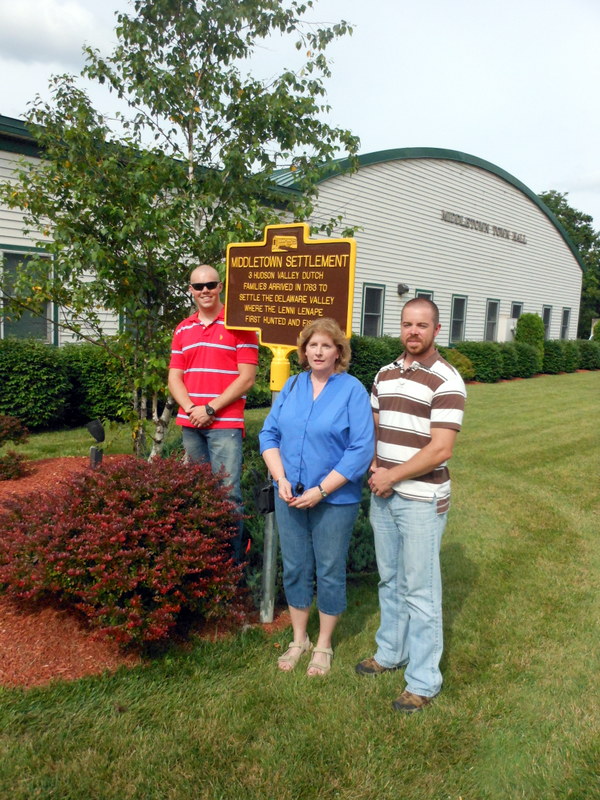
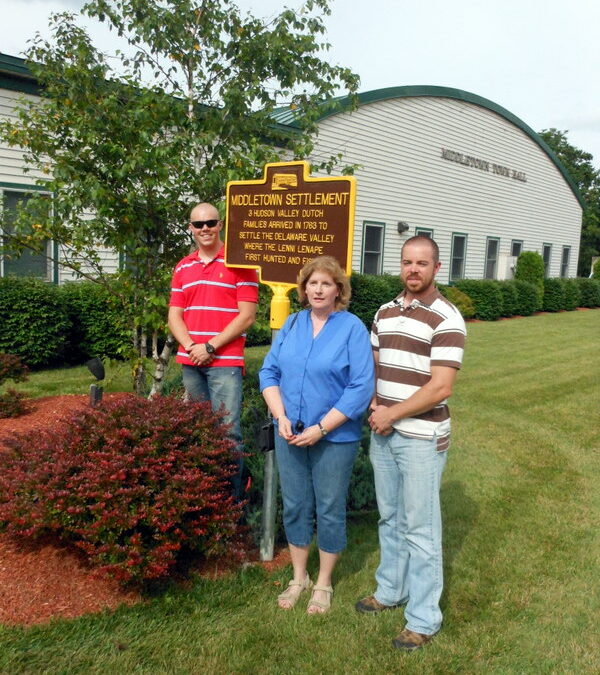
The 250th anniversary of the first European settlement of the Town of Middletown back in 1763 was observed with the dedication of a historic marker at the Town Hall July 12. HSM is proud to have facilitated the marker’s placement, and pleased to have had a small part in the ceremony. It included comments by former Supervisor now Town Historian Len Utter; former Town Historian and current Margaretville-New Kingston Presbyterian Church pastor Shirley Davis, and retired English teacher and local historian Dr. Bill Birns.

Other speakers were Nate Hendricks, 9th generation descendant of one of the original settlers, and State Asssemblyman Pete Lopez.

Adam and Nate Hendricks, 9th generation descendants of one of the first Middletown settlers, unveiled the historic marker with their aunt, Lori Hendricks Ballard. Photo by Roger Davis

The occasion recalled the emigration of a troupe of five Hudson Valley Dutch men: brothers Harmonus and Peter Dumond, Johannes Von Waggoner and Peter Hendricks and Hendricks’ teenage stepson Frederick Kittle. The initial ‘settlement’ was made up of their four farms, all along the East Branch of the Delaware River that had until then been the seasonal domain of the Lenni Lenape (Delaware) Indians.

Several more families came in the years leading up to the Revolution, but conflicts among Indians, Tories and Whigs sent them all back to the Valley until hostilities ceased. After the war, emigration began in earnest and folks arrived bearing surnames that still identify Middletown families: Yaple, Carpenter, Green, Utter, Craft, Mead, Ackerley, Grant, Delameter and many others.

In her prayer of blessing, Pastor Davis said, “We thank you for the first inhabitants of these hills and valleys and for the courage and wisdom You gave them to face the many hardships and dangers they encountered in taming some of the wilderness of these beautiful Catskills Mountains. These brave men – and women – came to this land with hopes and dreams of their own – the hope of new freedoms and new life, dreams of having a place to call their own, a home and community in which to raise not only their children, but a place for future generations to call home and community as well. And we, my friends, gathered here today in celebration of the 250th anniversary of the Town of Middletown, are part of those future generations.”

Dr. Birns pointed out that in the decades since these people put down roots, Middletown has been a haven for people of all religious, political, ethnic and social persuasions. “A town that started out with Hendricks, Dumond, Von Waggoner and Kittle has ended up with a big and fairly diverse US – It’s the US we celebrate today, along with those first families.”

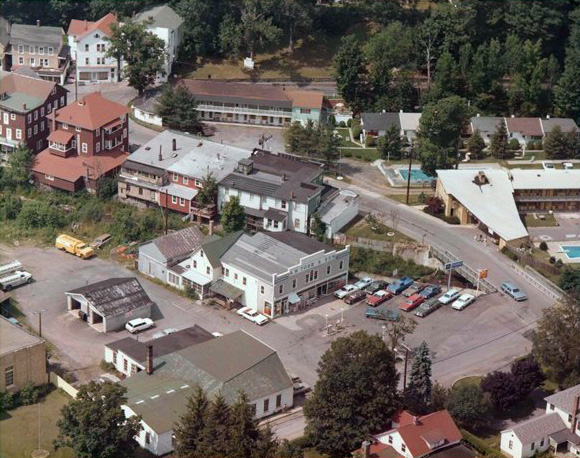
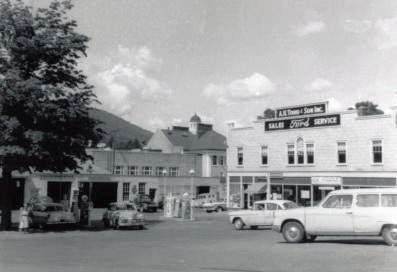
Bird’s eye view of A. H. Todd & Son

Bird’s eye view of A. H. Todd & Son

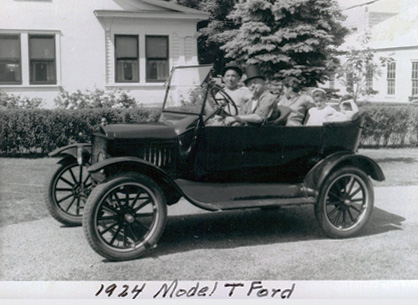
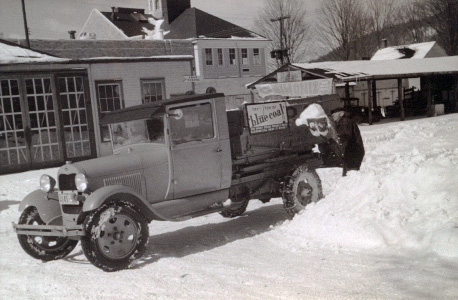
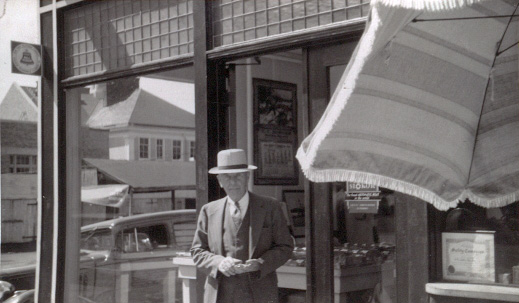
A. H. TODD & SON AUTO DEALERSHIP PHOTO GALLERY
Click for a larger view of each image…

Save the date!

You’re invited to join us on Friday, July 12th at 4p.m. at Middletown Town Hall, 42339 State Highway 28, Margaretville, for the unveiling of a commemorative marker in celebration of Middletown’s 250th Anniversary of settlement.

Dr. Bill Birns will be speaking as well as Town Historian Len Utter. Let’s hope the weather cooperates in making this a moment to remember!

Take a closer look…

Take a closer look…

Stroll three blocks of Margaretville’s Main Street and SEE what you’ve been missing . . . Click on this link, print it out and take an awesome visual scavenger hunt. It’s fun, challenging and could win you a ticket to our Labor Day concert and community picnic! Thanks to Sharon Suess, Ros Welchman, Larraine Dunham, Becky Hubbell and our own HSM Trustee Anne Sanford for putting this together.

Go directly to jail!

Go directly to jail!

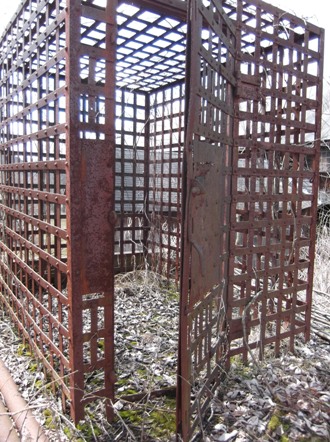
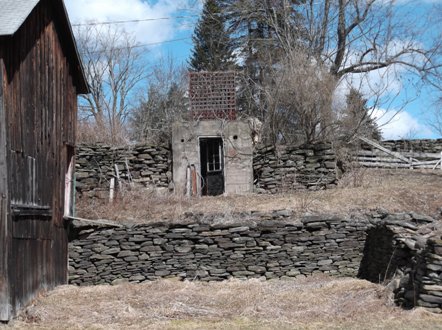
There is a mystery in Dunraven: Why would an iron jail cell have been set atop a concrete bunker built into a stone retaining wall on the old Smith farm on New Kingston Road (now the Blue Deer Center)?

The cell was made by the E. T. Barnum Wire and Iron Works Company in Detroit, which made all kinds of ornamental and functional tems, from fences to fire escapes, park furniture to mausoleum doors. Apparently, they were famous for their lattice work jail cells (“Highest award received at World’s Fair for Jail Cells” the company boasted in a 1924 catalogue.)

Barnum made double decker or single cells, equipped with food openings or hinged bunks, forged of “tool proof steel.” “A secure lockup or jail will conserve morals and lessen crime in your community,” claimed the catalogue, which offered a list of customers, including the City of Oneonta, and the villages of Deposit, Schoharie and Tannersville. In 1902, these cells cost about $217.

But why would one have ended up on the Smith Farm in Dunraven? Maurice J. Smith settled the place in 1821 and ran a prosperous farm and mill there, leaving the property in 1890 to his son Olney, who turned it into a popular boarding house which operated through the mid-20th century. A jail cell isn’t exactly a tourist draw.

Was this cell ‘rescued’ from a town that was tearing down its jail? Was it used as secure storage for valuables, explosives, livestock? The bunker below cannot be accessed by the cell above, but it contains a toilet and sink, purportedly for use by farm workers.

Ideas, anyone?